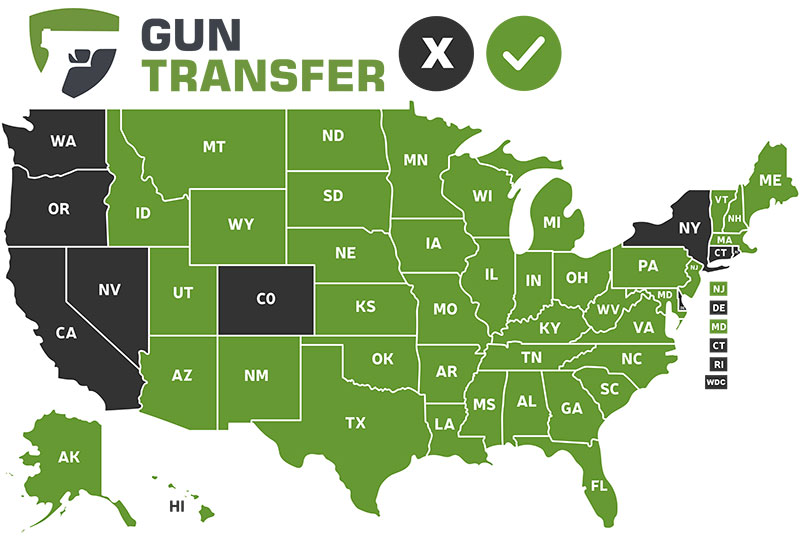
If you are transferring a firearm through a private sale, you may be asking whether a background check is required — and how to complete one properly. Understanding when a background check is required — and how it is conducted — is an important part of completing a firearm transfer responsibly.
A gun transfer background check is a screening process conducted before transferring a firearm to confirm that the recipient is legally eligible to possess one.
When required, background checks are typically conducted through:
A federally licensed firearms dealer (FFL)
The National Instant Criminal Background Check System (NICS), accessed by the dealer
Private individuals do not have direct access to NICS. Whether a background check is required depends largely on state law and the structure of the transfer.
Background Checks
When Is a Background Check Required ?
Background check requirements vary by state.
In Some States
Background checks for all firearm transfers
Dealer processing for private sales
Background checks for both sales and gifts
In Other States
Transfers involving handguns
Transfers between non-family members
Interstate transfers
Private party sales may not require a background check if no dealer is involved
Because requirements differ significantly, always review your state’s current laws before completing a transfer.
When a background check is required, the process typically follows these steps:
1
Visit a Licensed Dealer
The buyer and seller visit a licensed dealer (FFL).
2
Complete Required Forms
The buyer completes required federal and state forms.
3
Submit Background Check
The dealer submits the background check through NICS.
4
Transfer Proceeds
The transfer proceeds based on the result.
If approved, the transfer can be completed. If delayed or denied, the dealer must follow federal procedures. Private sellers cannot conduct official NICS checks themselves.
Private Party Transfers
What About Private Party Transfers?
Private party transfers are treated differently depending on state law.
Universal Background Check States
All transfers must go through an FFL
A background check is mandatory
States Without Universal Checks
Private sales may not require dealer involvement
Documentation is often recommended
Identity verification can help reduce risk
Responsible sellers should understand what their state requires before proceeding.
Required Information
What Information Is Used in a Background Check?
When conducted through a licensed dealer, a background check may require:
Legal name
Date of birth
Residential address
Government-issued ID
Completion of required federal forms
The dealer submits this information through the official background check system. Private individuals do not directly submit background checks through NICS.
Know the Difference
Background Check vs. Identity Verification
It is important to understand the difference between these two processes.
Official Background Checks
Conducted by an FFL
Submitted through NICS
Required by law in certain states
Identity Verification
Confirms that the person is who they claim to be
Verifies residency
Helps document responsible transfer practices
Gun Transfer provides identity verification tools and secure documentation to support private firearm transfers within existing legal requirements. We do not conduct official NICS background checks.
Documentation
Why Documentation Still Matters
Even in states where a background check is not legally required, documentation is strongly recommended.
Record Should Include
Names of both parties
Firearm details
Date of transfer
Signatures
Digital Advantages
Timestamped records
Secure & encrypted storage
Long-term availability
Clear documentation provides a record of when ownership changed hands. Maintaining secure records helps promote responsible firearm transfers.
Transfers Stopped For Safety Thanks To Gun Transfer!
Platform
How Gun Transfer Helps
Gun Transfer is a private compliance platform designed to support responsible firearm transfers.
Identity Verification Tools
Secure Digital Bill of Sale
Electronic Signatures
State-Specific Guidance
Lifetime Secure Record Access
Gun Transfer does not replace legally required dealer processing. Where state or federal law requires a background check through an FFL, those requirements must be followed. Our platform helps private parties document and structure their transfer responsibly.
Private individuals cannot directly access NICS. If a background check is required, it must be conducted through an FFL.
Is a background check required for every private sale?
No. Requirements vary by state. Some states require universal background checks; others do not.
Does Gun Transfer conduct official NICS checks?
No. Gun Transfer provides identity verification and documentation tools. Official NICS background checks must be conducted by licensed dealers where required by law.
What happens if a background check is denied?
If processed through an FFL, the dealer must follow federal procedures. Private sellers should not transfer a firearm to anyone known or reasonably believed to be prohibited from possessing one.
Do gifts require background checks?
This depends on state law. Some states require dealer involvement even for gifts.
Complete Your Transfer Responsibly
Before transferring a firearm:
Confirm your state’s requirements
Determine whether an FFL is required
Verify identity
Create proper documentation
Retain secure records
Gun Transfer helps private parties complete firearm transfers clearly and responsibly within current laws. LEARN MORE
This article is provided for informational purposes only and should not be considered legal advice. Firearm laws change frequently, and regulations may vary depending on local circumstances. Always consult current federal, state, and local laws or a qualified legal professional before buying, selling, or transferring a firearm.
GunTransfer helps firearm owners complete private firearm transfers responsibly while helping buyers and sellers remain compliant with applicable firearm laws.